Papad Making Machine: Questions to Ask a Manufacturer Before Buying
Adway Sawant · Oct 23, 2026
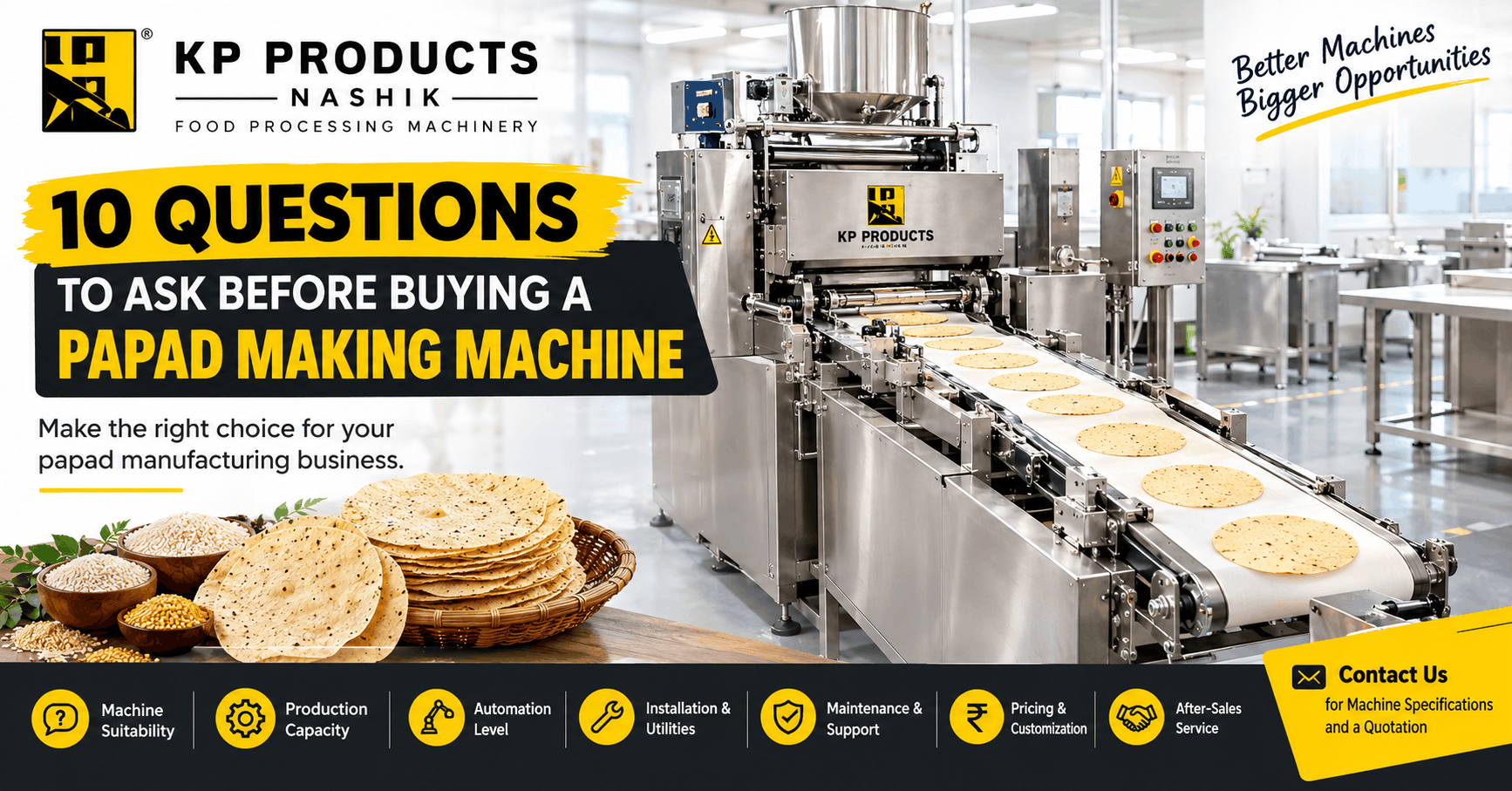
Starting or expanding a papad manufacturing business requires careful planning. One of the most important decisions is choosing the right papad making machine. The machine you select should suit your product requirements, production plans, available workspace, and business budget.
However, comparing machines based only on photographs or price can lead to confusion. Different machines may have different operating methods, product compatibility, automation levels, and maintenance requirements.
Before purchasing equipment, it is important to ask the manufacturer the right questions. This guide explains ten important questions to ask a papad making machine manufacturer so you can evaluate your options and make an informed decision.
1. Which Types of Papad Can This Machine Produce?
Start by explaining which type of papad you want to manufacture. Papad products can differ in ingredients, dough characteristics, thickness, diameter, shape, and processing requirements.
For example, a business may produce rice papad, urad dal papad, moong dal papad, sabudana papad, or khichiya papad. Each product may require different machine settings, dies, or processing arrangements.
Ask the manufacturer:
- Which types of papad are suitable for this machine?
- Can the machine handle my specific dough formulation?
- Are different dies or accessories required for different shapes and sizes?
- Can I provide my own dough for a product suitability trial?
- What adjustments may be required when changing products?
Do not assume that one machine can process every type of dough without modification. Share your actual product specifications with the manufacturer and request confirmation of compatibility.
2. What Is the Actual Production Capacity?
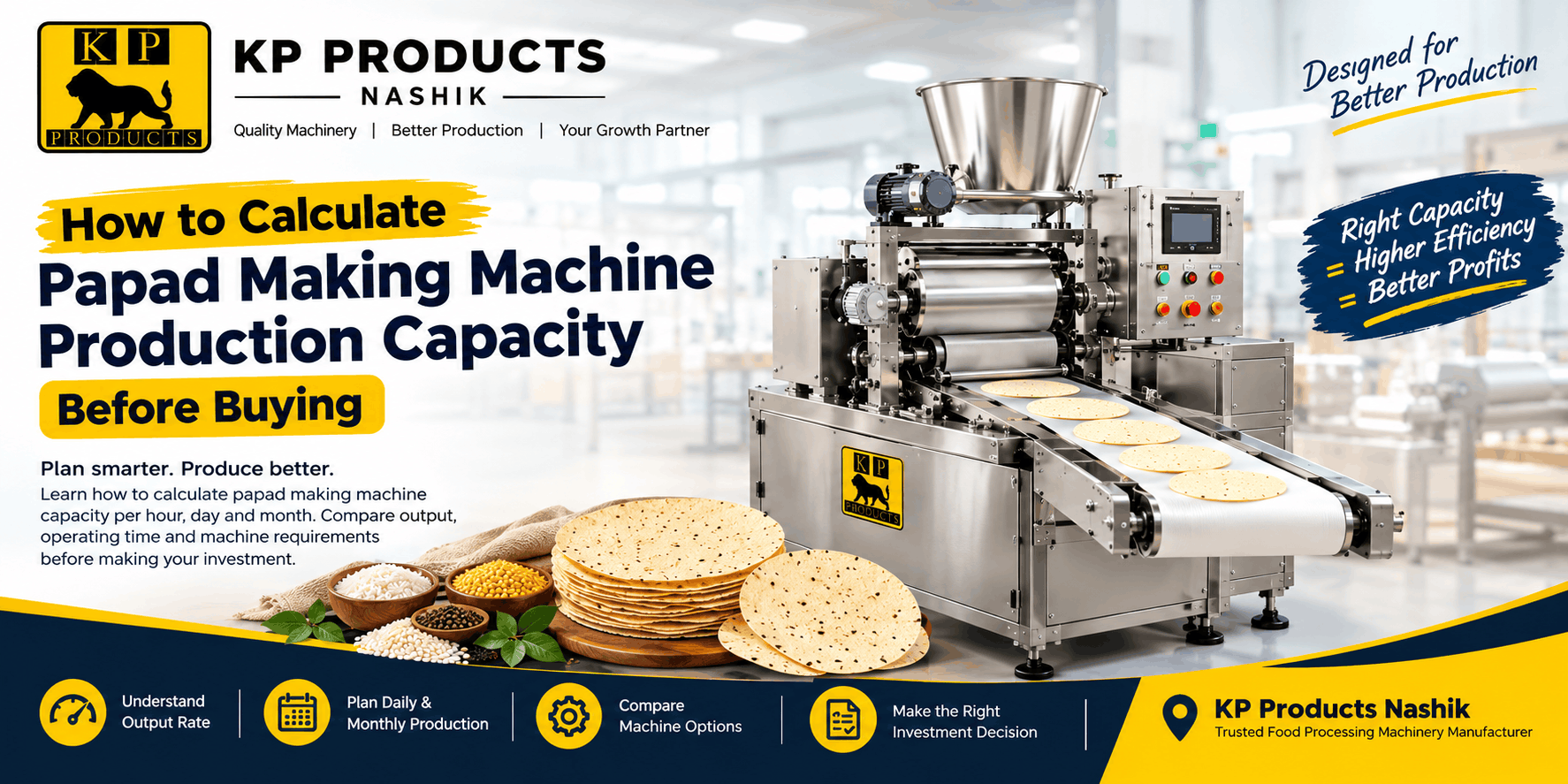
Production capacity is an important factor when planning a papad manufacturing business. However, a capacity figure alone does not always tell you how much saleable product you can manufacture during a working day.
Ask the manufacturer to explain how the stated capacity is measured. Is it based on pieces per minute, pieces per hour, kilograms per hour, or another measurement?
Also ask:
- What is the expected output for my papad size and thickness?
- What operating conditions are assumed in the capacity estimate?
- Does the estimate include feeding, handling, and product changeovers?
- How many workers may be required for the complete production process?
- Can the manufacturer demonstrate the machine using a product similar to mine?
Actual output can depend on dough consistency, product dimensions, machine settings, operator experience, downtime, and the arrangements used for drying and handling.
For a more realistic business plan, calculate expected daily output using verified hourly production, actual working hours, and allowances for interruptions. Ask the manufacturer to distinguish demonstrated output from estimated capacity.
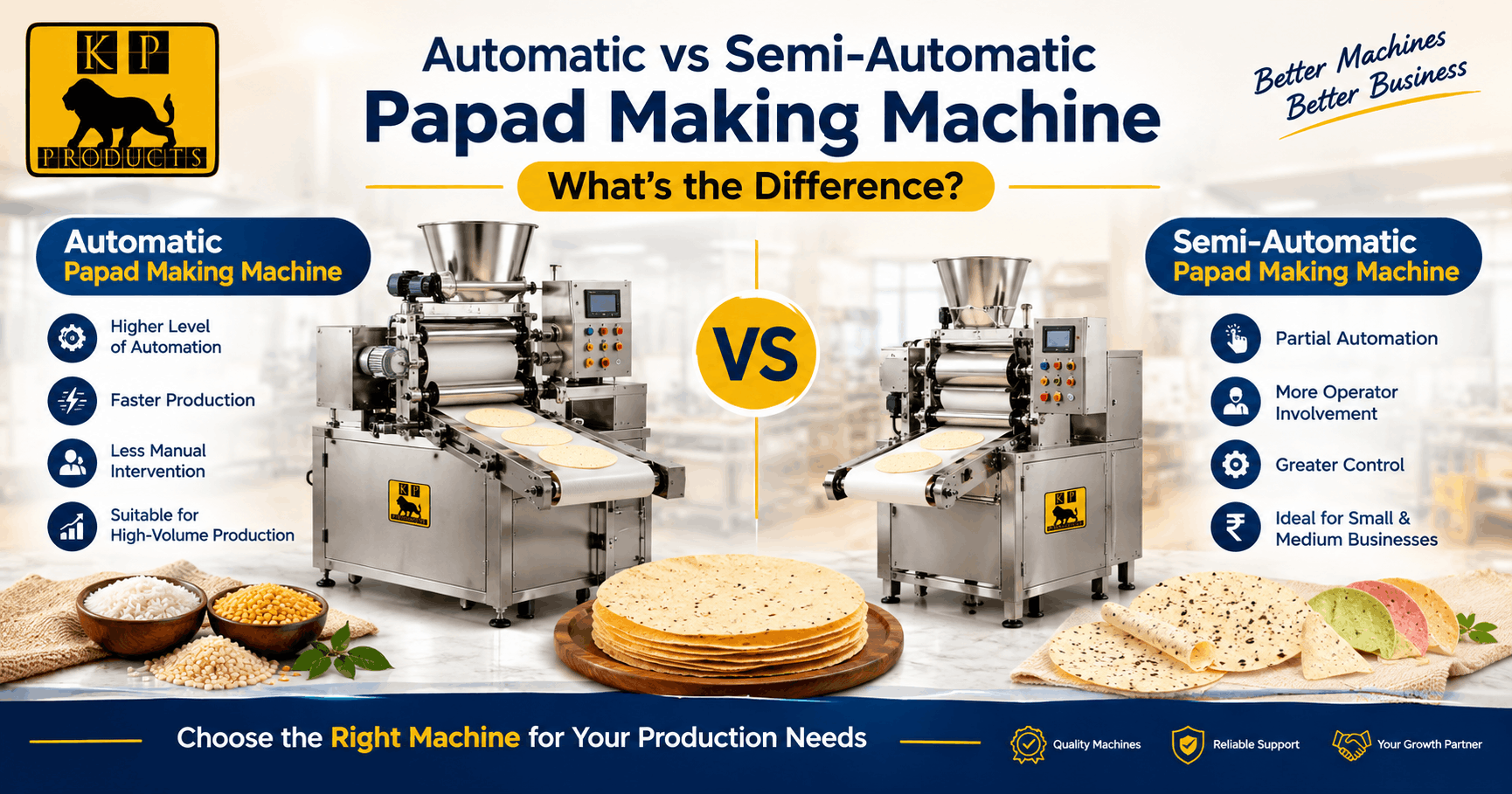
3. Is an Automatic or Semi-Automatic Machine More Suitable?
Papad making machines can differ in their level of automation. The right option depends on your production targets, available labour, investment budget, and preferred workflow.
A semi-automatic arrangement may involve more manual handling or operator involvement at particular stages. An automatic arrangement may automate selected operations, depending on its configuration.
Before making a decision, ask:
- Which operations are automated?
- Which operations still require manual work?
- How many operators are recommended?
- How are machine settings adjusted?
- Can the equipment accommodate future production requirements?
Compare the complete workflow rather than relying only on the labels automatic and semi-automatic. Request a demonstration and understand what is included in the quoted machine configuration.
4. What Are the Machine Dimensions and Installation Requirements?
Before ordering a machine, confirm that your premises can accommodate it safely and conveniently. A production machine may require additional room for raw materials, dough preparation, operator movement, product collection, and other processing activities.
Ask the manufacturer for:
- Overall machine length, width, and height.
- Required working and maintenance clearance.
- Electrical supply and connected load requirements.
- Any compressed-air, water, or other utility requirements, if applicable.
- Flooring, ventilation, and environmental requirements.
- Recommended arrangements for material movement and product handling.
Plan the entire production area, not just the footprint of the machine. If the equipment will be installed in an existing facility, share the available space and utility details with the manufacturer before finalizing the order.
5. What Materials and Construction Standards Are Used?
Food-processing equipment should be appropriate for its intended application and designed to support hygienic operation. Ask the manufacturer which materials are used in the parts that contact food and in the machine structure.
Useful questions include:
- Which materials are used for food-contact surfaces?
- How are product-contact parts cleaned?
- Are the relevant components accessible for inspection and maintenance?
- What cleaning procedures does the manufacturer recommend?
- What safety guards and emergency-stop arrangements are provided?
Ask for applicable technical specifications and documentation. Do not assume that every component is stainless steel or that the machine has a particular certification unless the manufacturer can verify the claim.
6. Can the Machine Be Customized for My Product?
Different businesses may require different papad diameters, shapes, thicknesses, or production arrangements. A manufacturer may offer different configurations, accessories, or dies depending on the machine model.
Before placing an order, ask whether the equipment can be configured for your requirements.
Ask these questions:
- Which papad sizes and shapes can be produced?
- Are additional dies available?
- How difficult is it to change between product specifications?
- Are special attachments needed for my product?
- Will customization affect delivery time, cost, or maintenance?
Provide a sample, photograph, or written specification of your product wherever possible. Obtain confirmation of agreed customization details in the quotation or order documentation.
7. What Is Included in the Price?
When comparing quotations, check that you are comparing equivalent machine configurations. A lower initial price may not include every accessory, installation service, or additional component your business requires.
Ask for a written quotation covering the following, wherever applicable:
- Main machine and included accessories.
- Dies, attachments, and optional equipment.
- Applicable taxes and transportation charges.
- Installation and commissioning charges.
- Operator training.
- Warranty terms and exclusions.
- Recommended spare parts and their prices.
Also confirm the payment schedule, expected dispatch date, delivery terms, and procedure for handling any changes to the order.
A written, itemized quotation helps you understand the total expected investment and reduces the risk of misunderstandings.
8. What Training and After-Sales Support Do You Provide?
Purchasing a machine is only one part of setting up production. Your operators also need to understand how to use the equipment correctly, follow operating instructions, and recognize when maintenance is required.
Ask the manufacturer:
- Is operator training included?
- Are operating and maintenance instructions provided?
- How can technical support be contacted?
- Is remote troubleshooting available?
- Can service visits be arranged when necessary?
- Are replacement parts available, and what are their typical lead times?
Confirm the support arrangements before purchasing. Ask for the relevant contact details, service terms, and warranty conditions in writing.
9. What Maintenance Is Required?
Regular maintenance can help keep food-processing equipment operating as intended. The maintenance schedule will depend on the machine design, operating conditions, usage, and manufacturer recommendations.
Before buying, ask which components require routine inspection, cleaning, lubrication, adjustment, or replacement.
You should also understand:
- Which maintenance tasks can trained operators perform?
- Which tasks require a qualified technician?
- Which spare parts should be kept in stock?
- How frequently should critical components be inspected?
- What safety precautions are required before servicing?
Request a maintenance schedule and follow the manufacturer's instructions. Never clean or service moving or electrically powered components without following the specified isolation and safety procedures.
10. Can I See a Demonstration Before Ordering?
A machine demonstration can help you understand the operating process and evaluate whether the equipment suits your product and workflow.
Where possible, ask the manufacturer to demonstrate the machine using a representative dough formulation and product specification.
During the demonstration, observe:
- How the dough is fed into the machine.
- How the product is formed and collected.
- Whether the required size and thickness can be achieved.
- How the machine is adjusted between batches.
- How operators interact with the equipment.
- How cleaning and routine maintenance are carried out.
Ask the manufacturer to record the test conditions and clarify any differences between the demonstration setup and the machine configuration being offered to you.
Additional Considerations Before Finalizing Your Purchase
After discussing the ten questions above, review the overall suitability of the equipment for your business.
Evaluate Your Business Requirements
Estimate your expected demand, available working hours, product range, labour availability, and planned production scale. This will help you identify the machine configuration that best matches your requirements.
Compare Complete Quotations
Compare machine specifications, included accessories, installation, training, warranty, and after-sales support. Do not base your decision on price alone.
Confirm Delivery and Installation Arrangements
Agree on the delivery schedule, site readiness, utility connections, installation responsibilities, and acceptance procedure before confirming your order.
Plan for Future Requirements
If you intend to expand your business, ask the manufacturer about available configurations and possible upgrades. Confirm technical compatibility rather than assuming that additional capacity can be added later.
Why Choose an Experienced Papad Making Machine Manufacturer?
Working with a manufacturer that understands food-processing equipment can help you evaluate product compatibility, machine configuration, operating requirements, and maintenance needs before investing.
KP Products Nashik manufactures food-processing machinery and can be contacted to discuss your papad-making equipment requirements. Share details about the type of papad you produce, the desired dimensions, your intended production scale, and your available workspace.
These details help establish whether a particular machine configuration may be suitable for your application. Confirm the available models, technical specifications, customization options, and commercial terms directly with the company.
Frequently Asked Questions (FAQs)
1. What should I check before buying a papad making machine?
Check product compatibility, verified production capacity, automation level, machine dimensions, utility requirements, construction materials, customization options, total price, warranty, training, and after-sales support.
2. Can one papad making machine produce different types of papad?
This depends on the machine design, dough characteristics, product dimensions, and available attachments. Share your product requirements with the manufacturer and confirm compatibility before purchasing.
3. How do I verify the production capacity of a papad making machine?
Ask how capacity is measured and request a demonstration under clearly stated operating conditions. Consider product size, dough preparation, operator involvement, handling time, and production interruptions when estimating daily output.
4. Should I buy an automatic or semi-automatic papad making machine?
The choice depends on your production targets, budget, labour availability, and required workflow. Compare the operations performed by each configuration and the amount of manual work involved.
5. Does the machine price include installation and training?
Inclusions vary by manufacturer and quotation. Request an itemized quotation specifying the machine, accessories, transportation, installation, training, taxes, warranty, and any optional services.
6. How important is after-sales support?
After-sales support can help with operating questions, troubleshooting, maintenance guidance, and replacement parts. Confirm support availability, service terms, and spare-parts arrangements before ordering.
7. Can I request a machine demonstration before buying?
Ask the manufacturer whether a demonstration or product trial is available. If possible, use your own representative dough and product specifications to evaluate suitability.
8. How can I request a quotation from KP Products Nashik?
Visit the KP Products website and contact the company with your product type, required papad dimensions, expected production needs, and installation location. Request current machine specifications, available configurations, and a written quotation.